Golf
April 14, 2026
We never lose
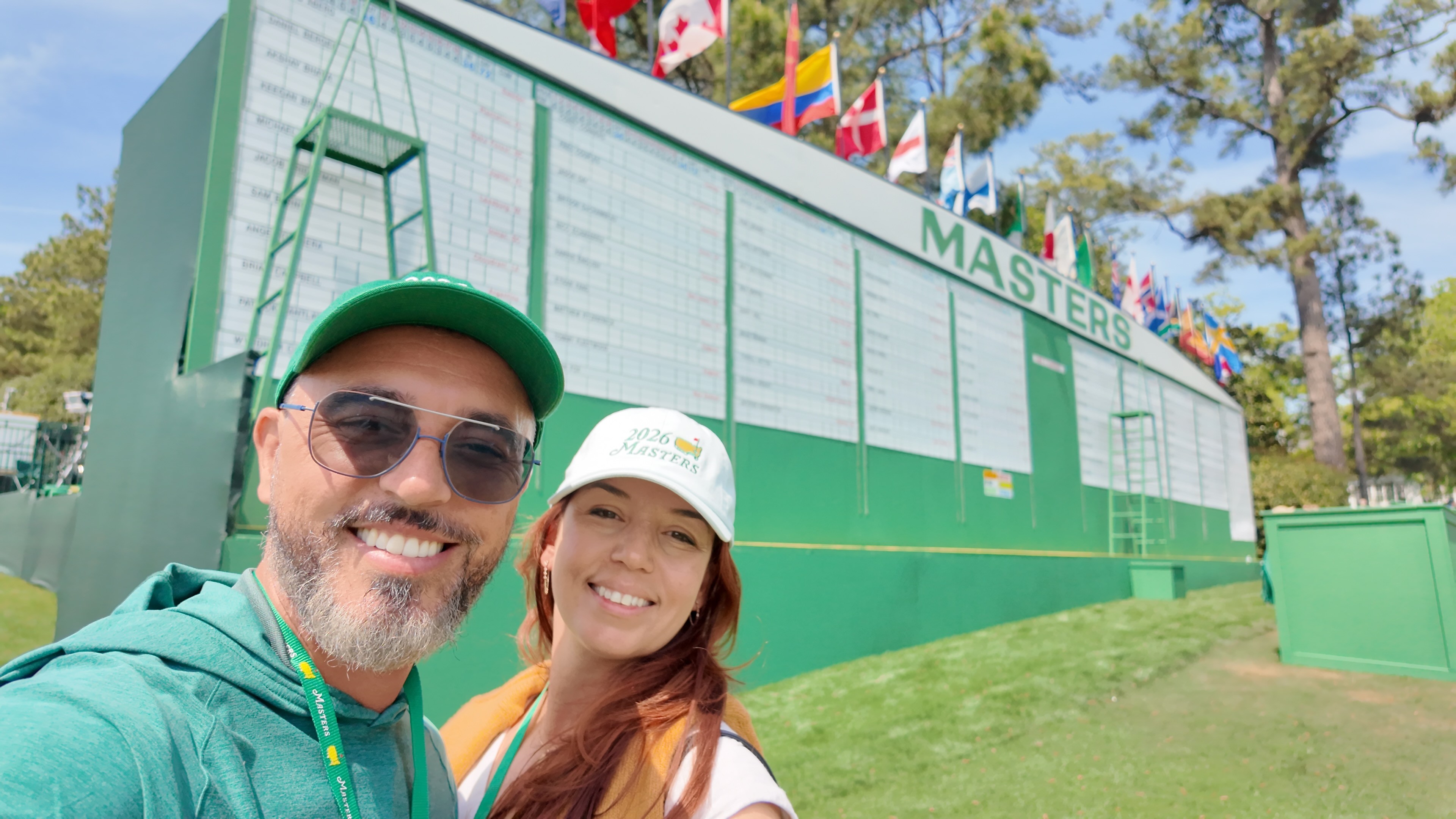
Augusta National Golf Club. Sunday. April 12, 2026.
I am waiting to watch the final round of the Masters with my wife when my phone rings.
One ticket. Do you want it?
There are rules. No cell phone inside. No one comes with me. I go alone or I don't go.
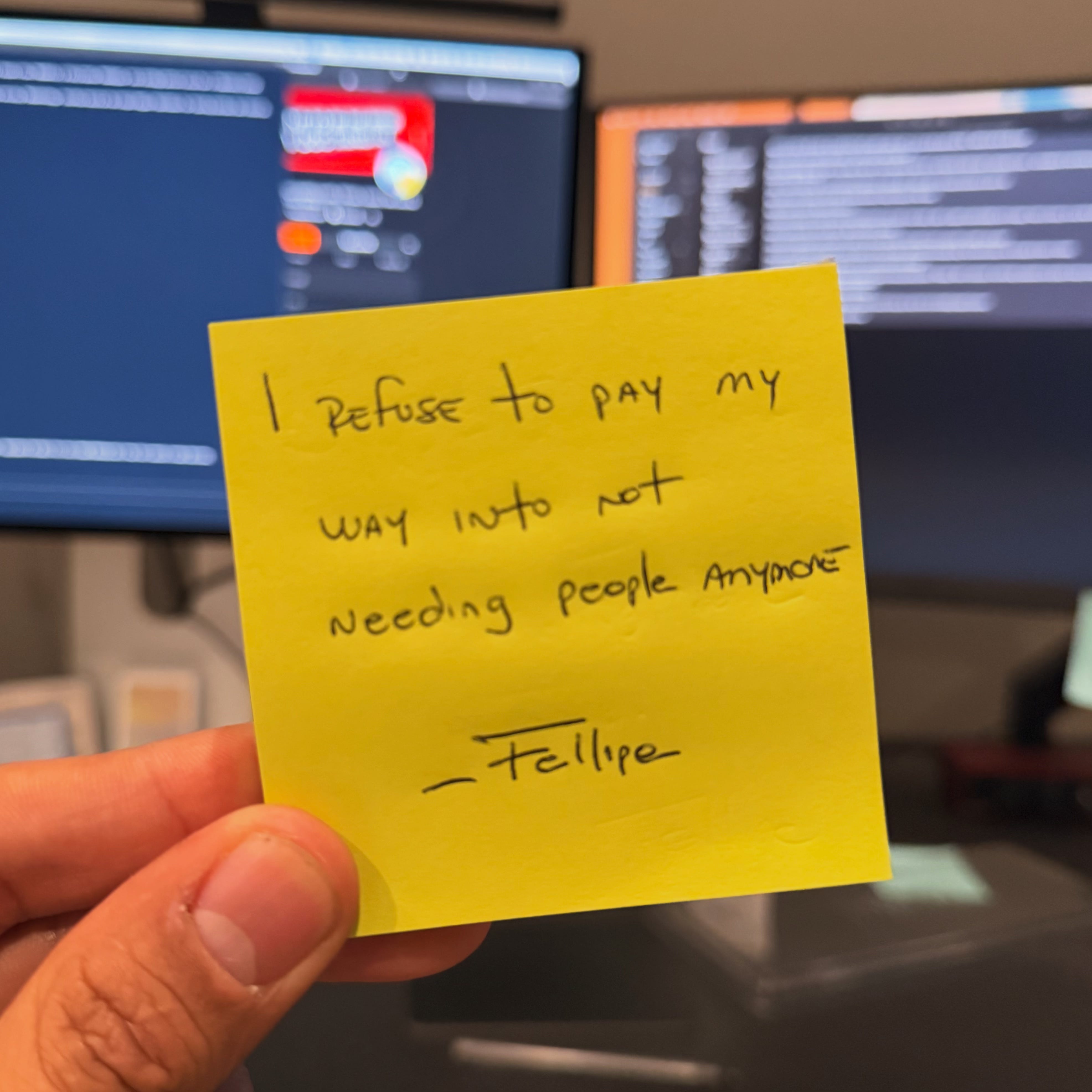
I grab a journal and a pen. I kiss my wife. I go.
Augusta in April smells like cut grass and sunscreen and something older than both. The azaleas are past their peak but still hanging on — pink and white against the Georgia pines. The air is heavy and warm and clean in a way that city air never is. You breathe it and something in your chest loosens.
I walk through the gates and I stop.
I am not watching the tournament.
I am watching the people.
I know this sounds strange. One of the most iconic golf courses in the world, one of the most iconic Sunday afternoons in sports history unfolding in front of me — and I am watching the people.
But here's the thing about Augusta. If you go to Disneyland, thirty percent of the people there don't want to be there. They're just going because their families dragged them. If you go to a restaurant, half the table would rather be somewhere else. Even church — people check their phones.
At Augusta on a Sunday, everyone wants to be there.
Every single person.
From the little boy in the tiny green jacket, walking so carefully like he's trying not to spill something precious. To the elderly couple on the mobility cart at the second fairway, sitting together, settled, patient — like people who have earned the right to be still.
I start writing in my journal. Not notes. Scenes. Smells. Faces.
I want to remember this.
My best friend is on the course.
Not watching. Playing.
Ted Scott is Scottie Scheffler's caddie. And Scottie — the world number one — has a chance. A remote chance. A miracle-would-need-to-happen chance. But sports is the place for miracles. That's why we watch.
I position myself at the first tee. The gallery is seven and eight deep. The air hums with something that is not quite sound — more like held breath. And then the players walk out.
I see Ted. I scream his name.
He is looking straight ahead, carrying the bag, doing his job. But he hears it. He finds me in the crowd. And he blinks — just once, slow — and keeps walking.
That's enough.
Scottie's approach shot on one lands on the green.
I can't see it land. But I can hear it — the crowd rising in a wave, a sound like the whole earth exhaling at once. And next to me, two men raise their beers.
Not he did it.
Not Scottie did it.
They clink their cups and say — today is the day. We're gonna do it.
We.
I write that word in my journal and I circle it.
No cell phones means no real-time updates. The scoreboards are manual. So news travels the old way — in sound. A roar erupts somewhere on the back nine and it rolls across the course like weather, hole by hole, until it reaches you. And you watch faces change as people figure it out. Someone checks the scoreboard. Someone else leans over. He made birdie. And the news keeps moving, and the sound keeps moving, and everyone is connected by this invisible thread of knowing and not-yet-knowing.
It is beautiful in a way that is almost impossible to explain to someone who has never been there.
I try to write it down anyway.
At the second fairway I find the couple on the cart.
He smiles at me — this old man, unhurried, comfortable in his own skin — and he says, from here you can see everything on this hole.
Someone behind me mutters they don't know what he's talking about.
But I do. I've studied this course. I know exactly what he means.
Scottie's tee shot flies and lands yards from where we're standing. Perfect. The best seat on the hole, and this old man knew it all along.
The people around him start to realize.
Hey, sir. Great spot.
How did you know?
They crowd in a little closer. And this couple — strangers to everyone here — they are suddenly the center. And suddenly it is not just Scottie out there.
It is all of us.
By fifteen, I can feel something shifting.
This is when Scottie needs miracles.
His tee shot finds trouble. The ball rolls into the trees on the right side of the fairway and stops — I am not exaggerating — a few yards from where I'm standing.
Thank you, Scottie. I almost died. But I will watch you shoot this.
The gallery scrambles. Everyone looking for a window through the pines. Most people are opening space to the left — they think that's where he'll go. I watch the lie and I think — no. He's going right.
I find one of the course marshals and I tell him: I don't think they're going that way. I think he's going right.
He looks at me. He looks at the cameraman. He points.
The camera moves.
And when Scottie walks up and looks at his lie and says guys, move a little bit, I'm going this way — the camera is already there.
For one moment, I am not watching the tournament. I am part of the coverage.
We are part of the coverage.
Scottie punches it through the window. The ball catches a branch. It lands in a semi-blocked lie on a weird angle — still in trouble, still not clean. From where I'm standing it looks nearly impossible. But he is alive. And from a situation that should have ended his round, he steps up to his third shot — this green that has swallowed his ball three times this week — and it lands.
The sound.
I have heard loud before. Concerts. Stadiums. But this — this is something else. This is the sound of thousands of people feeling the same thing at exactly the same moment. Unscripted. Uncoordinated. Real.
The group of friends next to me are not clinking beers anymore.
They are chest-bumping. They are spilling. They do not care.
And then I see a boy.
He can't be more than eight years old. He turns to his father and grabs his arm with both hands and he screams —
Daddy. Daddy. We did it. We did it.
That boy sent me somewhere else.
Brazil. 1995. A small fishing village in the south.
We do not have much. We have a small television and a couch and each other. Flamengo — my team, my father's team, the team of our blood — is playing for the championship.
I am ten years old.
And we are losing. Zero to two. We need the tie, so I look at my father and I say —
I think we lost.
He looks at me the way fathers look at sons when they are teaching something that cannot be taught in a classroom.
We never lose, son. We never lose until the end of the game.
Flamengo scores.
One to two.
Flamengo scores again.
The room explodes. I am running. I don't even know where I'm running to. I just run because my body cannot hold what I am feeling. And my father — my father is on his knees in the living room, arms open, and I crash into him and we are both screaming and both crying and I don't think I remember any hug in my forty-two years on this earth as vividly as I remember that one.
That hug.
That goal.
That we.
We lost that night, by the way. Fluminense scored again. I cried myself to sleep. The worst sports night of my life.
But thirty years later — it is the game I love the most. The best memory I have of football. Not because of the result. Because of that moment on my father's arms. Because of what we became in that room, just the two of us, watching something together and feeling everything together.
I live more than six thousand miles from my father now.
I still follow Flamengo so I can text him after every game. That's how we stay connected. That's how a lot of us stay connected. Across oceans. Across years. Across everything that pulls families apart.
Sports does that.
It always has.
Back at Augusta. Sixteenth hole.
Scottie's tee shot nearly finds the bottom of the cup. From where I'm standing it looks like inches — maybe it was more, but that is what it felt like from the gallery, and I am keeping my eyes exactly where they were. I have not watched the highlights. I have not gone back to check. These are my memories, from my angle, on that afternoon. I am not giving them up.
I have never high-fived so many strangers in my life.
A woman and her husband — strangers — hug me. I hug them back. A teenager jumps onto his father's back. Someone is crying — actually crying — and no one thinks that is strange.
I find the scoreboard with my eyes. I find a gap in the crowd and I scream for Ted.
He finds me.
He looks at me — really looks at me — and I say it:
We're not out of this yet dude. We can do it!
He nods.
We both believe it.
Seventeen. No birdie.
Eighteen. The ball spins out. Rory holds on. Two shot lead. Tournament over.
Scottie and Ted walk off the green carrying something heavy.
But here is what I want to say to Scottie. To Ted. To Rory. To every player who has ever walked that course or any course, who has ever hit a shot while thousands of people held their breath:
You have no idea what you create.
Every shot you hit — there is a ten-year-old boy watching with his father. There is an elderly couple who saved their whole lives for this trip. There is a kid in a small village somewhere in the world, on a small television, learning from their parent what it means to never give up until the end.
You are not playing alone.
You are never playing alone.
And the memories you create — they outlast everything. They outlast the trophies. They outlast the losses. Forty years from now, that boy who grabbed his father's arm on fifteen — when his father is no longer here, he will hear the Masters music and he will feel that arm again. He will be back in Augusta on a Sunday afternoon in April, and he will be eight years old, and his father will be right there.
You gave him that.
Our country is divided. The world is divided. We fight about everything — politics, religion, what we believe, what we fear.
But for one moment on a Sunday afternoon, strangers became family. A divided crowd became a single voice. No party. No side. No agenda.
Just all of us looking at the same ball, screaming the same thing —
Get in the hole.
And when it did — we grabbed whoever was next to us. We held on. We celebrated something together.
If we can do that around a golf shot —
We can do it around the things that actually matter.
We never lose, son.
We never lose until the end of the game.